Design thinking has left the post-it wall
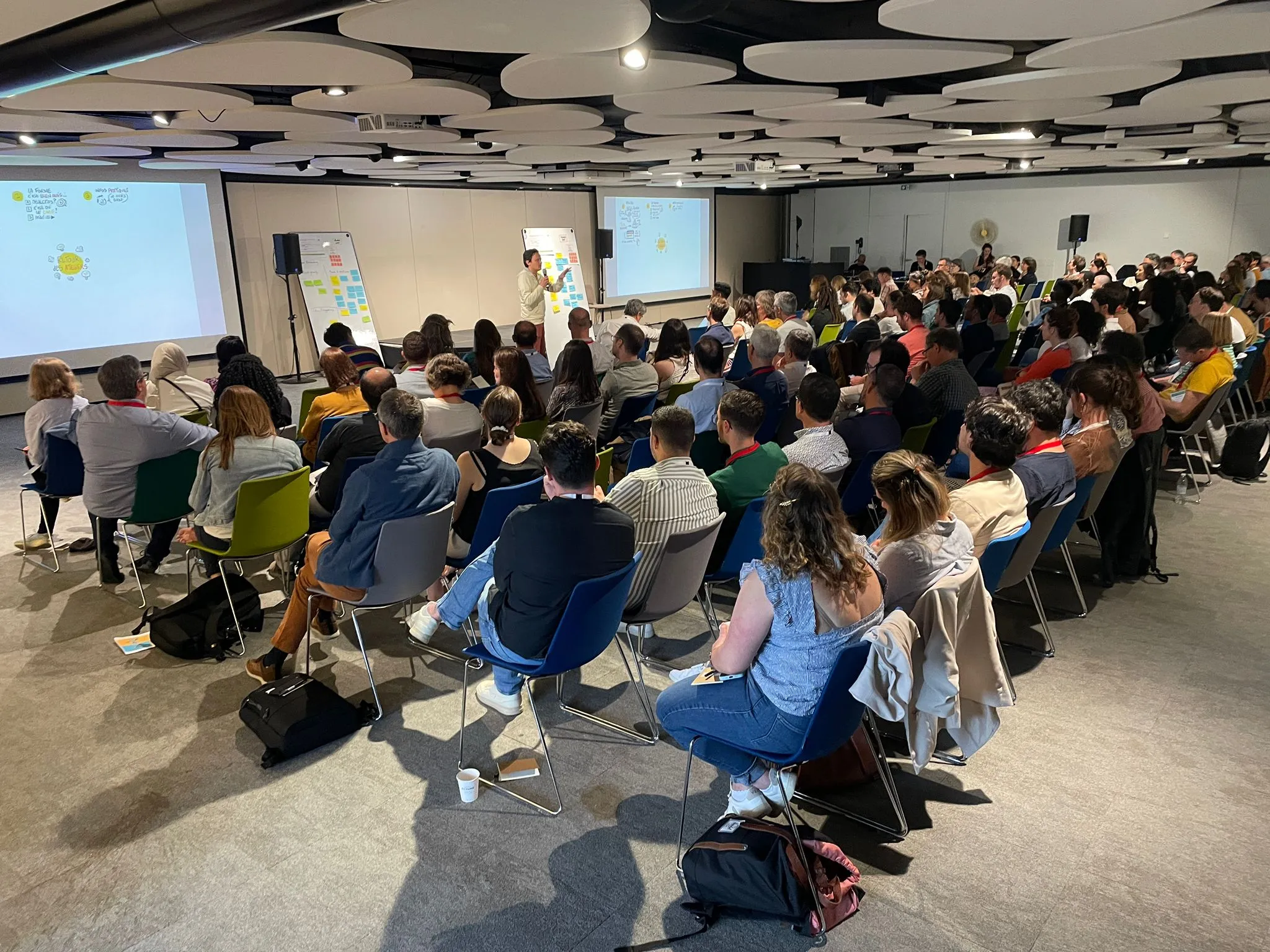
Fifteen years after it arrived in companies, design thinking no longer stands out for its method. The five stages are well known, post-its are everywhere, and most teams know how to run an ideation workshop.
What separates a workshop that produces from one that merely keeps people busy now lies elsewhere. In the rhythm it is given. In the energy of the team running it. In the clarity of roles. And in an environment that either allows or forbids what you want people to do. Here are five shifts we are seeing in the field.
AI widens the field, then leaves the room
Teams now arrive at workshops with pre-generated ideas, and that is good news. The blank page is costly in collective energy, and starting with material lets you get to the debate faster.
We use AI extensively upstream. To support an NGO on a sensitive topic, we built a choose-your-own-adventure book: thirty pages, three scenarios, choices, dead ends, turning back. A resource impossible to produce by hand in the time available, and one that opened the collective conversation on much calmer ground. For an engineering school, we replaced the empathy map with real conversational agents, each given a backstory and needs, with whom the students interacted all week.
The risk does not lie in these uses. It lies in the moment of decision. A model produces consensus, the familiar well phrased, proposals no one disputes. At the opening, AI opens things up. At the moment of decision, it closes them down. So there needs to be an explicit moment when the screens go down, and someone whose role it is to hold it.
The body and space are back in play
Bodystorming, physical journeys, full-scale mock-ups: you test an idea by acting it out rather than describing it. This is not a facilitation gimmick. Shifting reasoning from language to gesture brings out constraints no post-it reveals. An impossible flow of movement. A waiting time invisible on paper. A gesture no one had thought of.
This requires open floor space and furniture you can move without asking permission. A U-shaped room filled with tables rules out this whole family of techniques before anyone has even suggested it.
The prototype rough enough to be criticized
Low fidelity is no longer a fallback; it is a deliberate choice. A prototype that is too polished invites admiration rather than criticism, and admiration moves no one forward. Cardboard forces candor.
The group still has to accept being seen in the middle of searching. That cannot be decreed in an introduction. It takes hold in the first few minutes, through the way the host team itself embraces the unfinished, and through materials that are ready and visible, making the gesture feel obvious rather than bold.
The visual record becomes working material
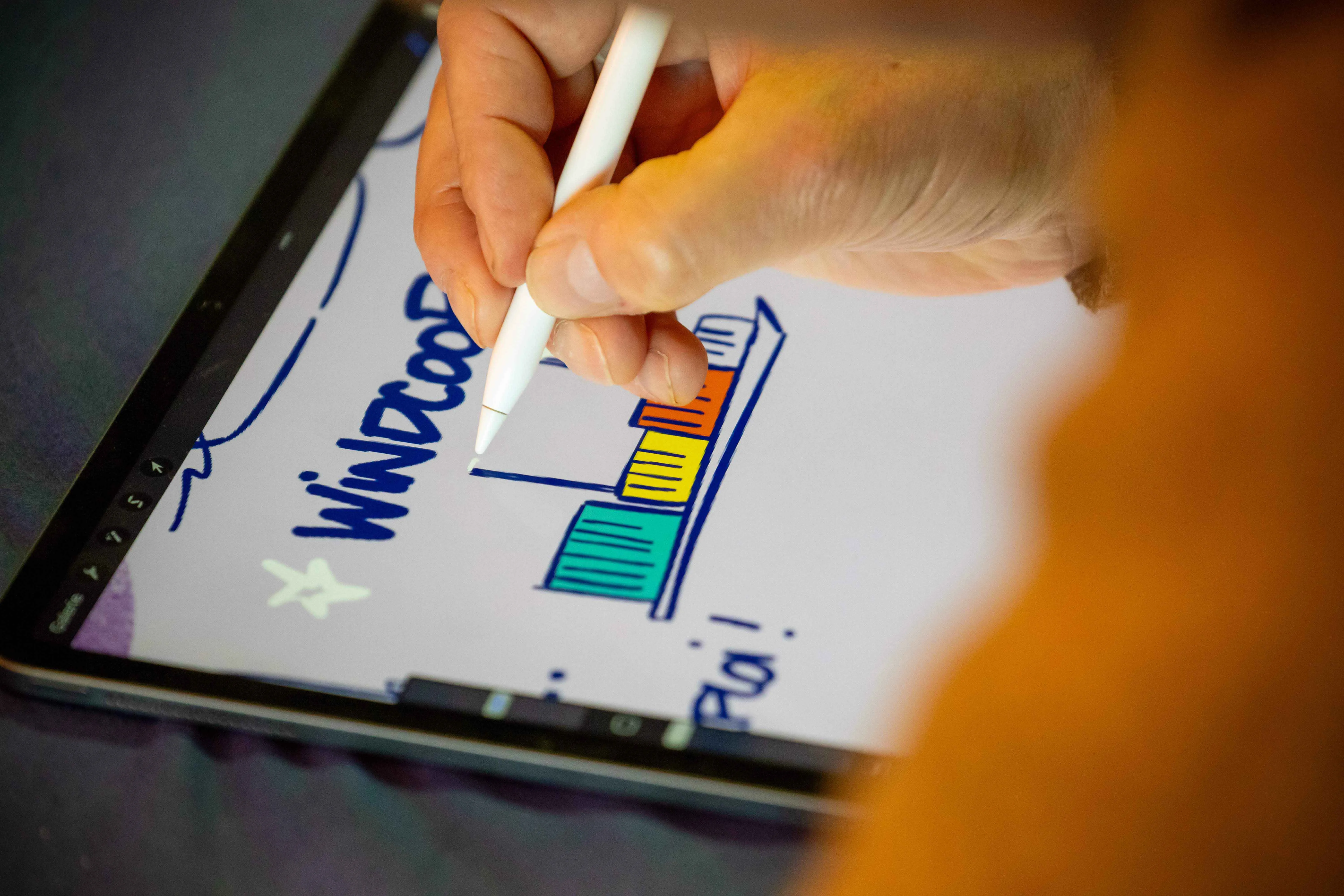
The fresco is no longer a souvenir of the day. It is the resource you come back to within the hour, to pick up a dropped thread, spot a repetition, anchor a decision at the moment it is made.
This is one of the places where the tool we have developed really makes a difference. Post-it walls and flipcharts are photographed, then transcribed into searchable text, organized by sequence and by team. What used to be a wall of paper no one could read the next day becomes material you can query during the session itself. The wall remains essential. It just no longer gets lost.
We no longer test ideas, we test hypotheses
Before prototyping, you spell out what the idea needs to be true in order to stand up. Then you test the most fragile of those beliefs, at the lowest possible cost. The shift is subtle and profound: it turns a creativity workshop into a risk-reduction workshop.
This requires knowing who owns the question, and how far the group is mandated to move it. A workshop that tests hypotheses without an identified sponsor produces conclusions no one will take forward.
Three things we check before every workshop
Who decides. If the person who can make the call is not in the room, we say so before, not after.
What the room allows. We go and see, we measure, we ask whether the furniture moves. A floor plan is decided on the site visit, not on the morning itself.
What will remain. How the work will be captured and fed back is designed at the same time as the flow of the day, never at the end.
What makes the difference
None of these five techniques is hard to understand. All of them are easy to get wrong. They rarely fail on method and almost always on conditions: a rhythm that is not held, a room that rules out the exercise, a team that passes its nerves on to the group, a missing person.
At Flow Design, the content belongs to those who carry it. Our job is to bring together everything else, so that nothing gets in its way.